
Rodent Proofing in South London
Rodents are one of the most persistent problems South London homeowners face, and the numbers suggest it is getting worse. UK councils responded to more than 291,000 residential pest control requests in 2024, roughly one every two minutes, and around nine in ten of those visits were for rodents (Aviva). The British Pest Control Association has recorded sharp rises in reported activity too, with nearly half of pest professionals in one national survey reporting an increase in rats and mice (BPCA). In a densely built, older part of the city, the question is rarely whether rodents are nearby. It is whether they can get into your home.
Here is the part most people miss. You can trap or bait every mouse and rat in a property, but if the gaps that let them in are still open, more will follow within weeks. Rodent proofing, sometimes called rodent exclusion, is the step that breaks that cycle. It finds and seals the routes rodents use, so the problem does not simply return after treatment.
This guide explains how mice and rats get into South London homes, what proper proofing involves, what you can do yourself, and when it is worth calling a professional. At Pest2Control, rodent proofing is one of our core specialisms, and it is the reason our results last.
How Mice and Rats Get Into South London Homes
The gaps rodents exploit are far smaller than most people expect. A house mouse can squeeze through a hole about the width of a pencil, roughly 6mm, and a rat needs only a gap the size of a 20 pence coin. They gnaw at soft edges to make small openings bigger, so a minor flaw rarely stays minor.
South London’s housing makes this easier for them. Rows of Victorian and Edwardian terraces, converted flats and older semis share weak points that rodents treat as an open door:
- Gaps around pipework, cables and other service entries through walls
- Worn, cracked or broken air bricks and vents
- Gaps under doors and around older timber frames
- Damaged brickwork, crumbling mortar and open joints along the roofline
- Loose roof tiles, rotting fascia and gaps in the eaves or soffits
- Broken or unsealed drains, one of the most common ways rats get inside
Mice tend to use tiny gaps both high and low, so a hole near the roofline matters as much as one at floor level. Rats more often travel underground and come up through damaged drainage. Shared party walls and connected roof voids in terraces mean a rodent in one house can move along the row, which is why a neighbour’s problem can quickly become yours.
Why Rodent Proofing Beats a One-Off Treatment
Treatment and proofing solve two different problems. Treatment deals with the rodents already inside. Proofing closes the routes they used to get there.
Rodents leave scent trails that lead others straight back to the gap that worked last time, so an untreated entry point is effectively an invitation. This is why baiting or trapping alone so often turns into a cycle of repeat visits. Seal the building properly and you remove the reason the problem keeps coming back.
For that reason, proofing is not really an optional extra. In most cases it is the part that turns a short-term fix into a lasting one. It can be carried out on its own or as the final stage of a full rodent control programme.
What Professional Rodent Proofing Involves
Effective proofing is methodical work, not a quick squirt of expanding foam around a pipe. A proper job usually runs like this.
A full survey first. Every actual and potential entry point needs to be found before anything is sealed, inside and out: the base of the building, the roofline, around pipes and cables, the drains and the loft. Because mice use such small gaps, this survey is where most of the value lies. Miss one hole and the whole job is undermined. If you are not sure how bad the problem is, a property pest inspection is the quickest way to find out.
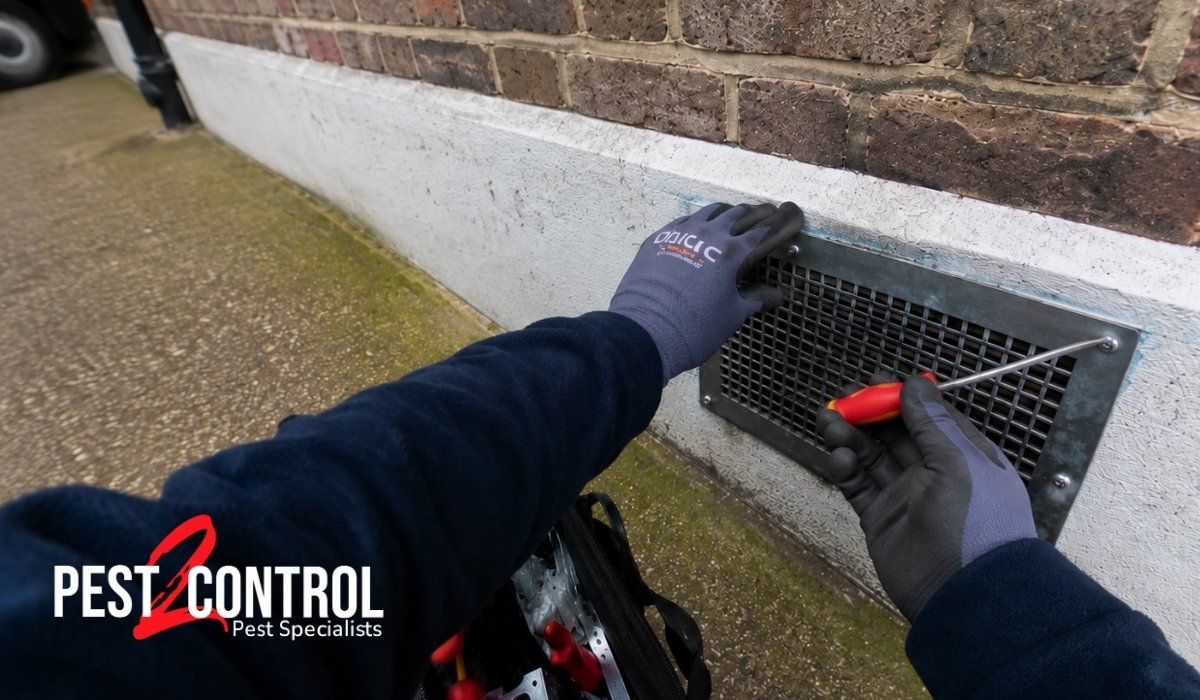
Sealing with the right materials. Each spot needs a material suited to it that rodents cannot chew or push through. That might mean wire wool and sealant around pipework, stainless steel or micromesh over vents and air bricks, repairs to brickwork and mortar, and brush strips on doors. Cheap filler alone does not last, because rodents gnaw straight back through it.
Checking the drains. Where rats are involved, the drainage almost always needs attention. Cracked joints and open runs let rats travel underground and surface inside, so a rat proofing job that ignores the drains rarely holds. If you have persistent activity with no obvious entry point above ground, the drains are the first place to look.
A clear explanation. You should finish knowing exactly what was sealed and why. That transparency is how you tell a proper job from a rushed one, and it is central to how we work.
How to Rodent Proof Your Home: DIY Steps and Myths to Avoid
Some prevention is genuinely worth doing between professional visits. Some popular advice simply does not work.
Worth doing:
- Store food, including pet food, in sealed containers and clear spills quickly
- Keep bin lids closed and bin areas tidy
- Cut back climbing plants and overhanging branches that give rodents a route to the roof
- Fit a brush strip under any external door with a visible gap
- Report broken drains, air bricks or brickwork so they can be repaired properly
Not worth relying on:
- Peppermint oil, dryer sheets and ultrasonic plug-in repellers. There is little evidence they keep a determined rodent out, and they do nothing about the gap letting it in.
- Shop-bought foam or filler as a permanent seal. Mice and rats chew through soft materials, so this patches a hole for a week or two at best.
The honest answer to how to stop mice for good is that it takes a proper survey and durable exclusion work. DIY can reduce what attracts rodents, but it rarely seals a building well enough on its own.
Signs You Already Have a Rodent Problem
Proofing is easier when you catch activity early, so it helps to know the signs:
- Small, dark droppings, often near food, under sinks or along skirting
- Scratching or scurrying in walls, ceilings or the loft, usually at night
- Gnaw marks on packaging, cables, skirting or door frames
- A musky, ammonia-like smell in enclosed spaces
- Smear marks where greasy fur has rubbed along walls and skirting
If any of that sounds familiar, you likely have activity already, and treatment and proofing usually go together. Mice tend to show up first in kitchens and wall voids, while squirrels are more often heard in the loft.
The Health and Property Risks of Ignoring Rodents
Rodents are more than a nuisance. Rats and mice can contaminate food and surfaces and spread illnesses including leptospirosis, salmonella and, rarely, hantavirus. They also gnaw constantly to keep their teeth in check, and chewed electrical cabling is a recognised fire risk. Left alone, a small problem in one home can spread along a terrace and become far more expensive to put right. Set against all of that, proofing is a small, one-off piece of work.
Why Local South London Expertise Matters
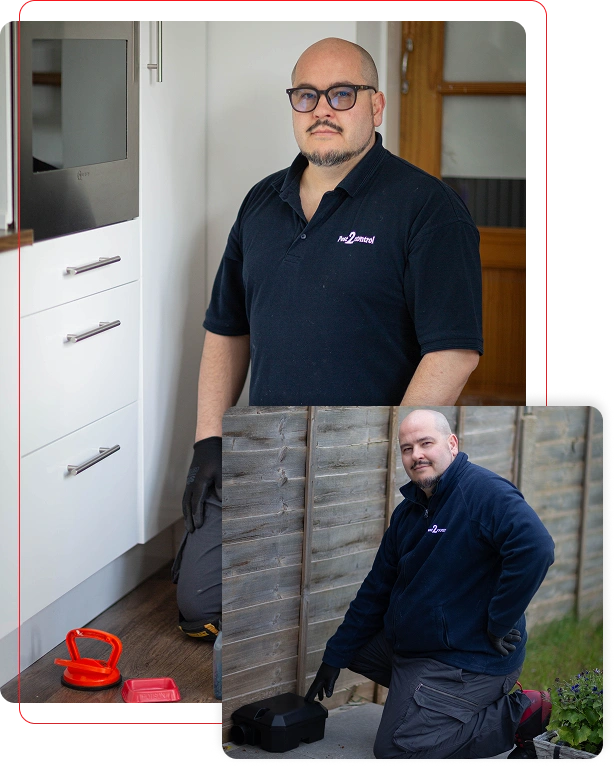
A lot of good proofing comes down to knowing the local housing. As a Bexley-based team, we know the common weak points in the area’s terraces and semis and where rodents tend to break in. We are Level 2 certified, fully insured and members of the BPCA, BASIS Prompt and RSPH, with more than twelve years of hands-on experience behind every job, and we back our work with a satisfaction guarantee.
We cover Bexley, Bexleyheath and areas across South London including Croydon, Bromley, Greenwich, Lewisham and Wandsworth, with out-of-hours and weekend appointments available. Whether the issue is mice, rats or squirrels, proofing is what keeps them out for good.
Rodent proofing is the difference between clearing a problem and solving it. In an older, densely built part of the city like South London, sealing the building properly is the single most effective way to keep mice and rats out, especially before winter pushes them indoors. If you are dealing with rodents now, or you simply want to protect your home, a proper survey and durable proofing will do far more than any trap or repellent on its own. To get started, request a free quote from Pest2Control or call the team for honest advice on proofing your property.
Frequently Asked Questions
Rodent proofing, or rodent exclusion, is the process of finding and sealing every route mice and rats use to get into a property, using durable materials they cannot chew or push through. It stops infestations returning after treatment.
In most cases, yes. Treatment clears the current infestation, but without sealing the entry points the property stays open to the next one. Proofing is what makes the result last.
Yes. We assess for both, because they exploit different weak points. Mice target tiny gaps high and low, while rats often come up through damaged drains and brickwork.
It depends on the size of the property and the number of entry points, but most domestic jobs are completed in a single visit. You get a clear estimate over the phone first.
Not reliably. These may cause a brief reaction, but rodents soon return, and neither closes the gap letting them in. Durable proofing is the only approach that keeps them out long term.