
Mice in Loft
Scratching above the ceiling at night is usually the first sign of mice in the loft. Mice breed fast: the British Pest Control Association says one female can have 5 to 10 litters a year. And dealing with pests properly pays off: a BPCA-commissioned report found professional pest management prevents around £1.9 billion in costs to UK homes and businesses every year.
Traps and poison deal with the mice already inside. They do nothing about the gap the mice came in through.
This guide covers the signs, how mice get in, and how to get rid of them for good. If you would rather have it looked at now, our mice control service covers Bexley and the whole of South London.
Why Do You Have Mice in the Loft?
Lofts Give Mice Everything They Need
A loft is warm, quiet and full of nesting material. Heat rises from the house, insulation makes a perfect nest, and stored boxes give mice something to shred.
Most people only go up a few times a year. A nest can grow for weeks before anyone notices.
Mice Do Not Hibernate
House mice live around buildings all year. As the weather turns colder, field mice that spent the summer outdoors look for somewhere warmer too. That is why loft problems tend to start in autumn.
The Loft Is Rarely Where It Ends
From the roof space, mice travel down wall cavities, along pipe runs and under floorboards. They often end up in kitchens and airing cupboards. A loft problem left alone tends to become a whole-house problem.
Signs of Mice in the Loft
You do not need to see a mouse to know you have them.
What to Look For
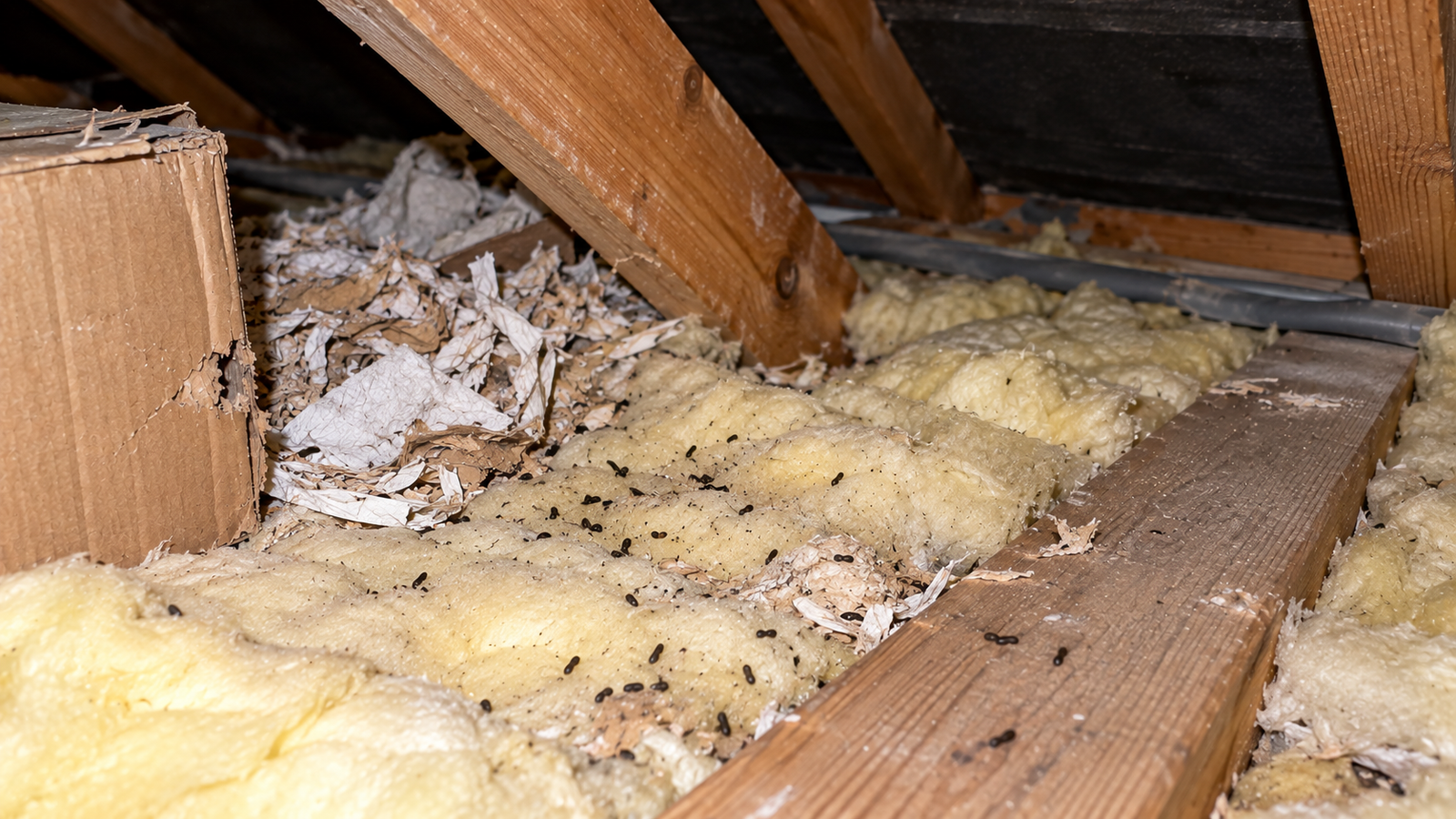
- Droppings: black, about the size of a grain of rice. Look along joists, on top of insulation and near the hatch.
- Shredded insulation and boxes: mice tear up insulation, cardboard and old clothes for nests.
- Smear marks: dark, greasy marks along beams and around holes, left by the oils in their fur.
- Gnaw marks: on wood, plastic, pipe lagging and electrical cables.
What to Smell and Hear
- A strong ammonia smell: mice urinate constantly, and in a closed loft it builds up.
- Noise at night: light scratching, scurrying and the occasional squeak, usually after dark.
Fresh or Old Droppings?
Fresh droppings are soft and shiny. Old ones are dry and crumble. If you are not sure, sweep a small area clean and check again in two or three days. New droppings mean an active problem.
Rats or Mice in the Loft? Telling Them Apart by Sound
Not every noise in the loft is a mouse, and each animal is dealt with differently.
What Do Mice in the Loft Sound Like?
Light, quick scratching and pattering, mostly at night. It can sound like something running inside the ceiling or walls. The noise is soft and comes in short bursts.
What Do Rats Sound Like?
Heavier: thumping, dragging and louder gnawing. Rat droppings are much bigger, around the size of a raisin. If you think it is rats, see our rat control page.
What About Squirrels?
Squirrels are active in the day, so noise in the morning or late afternoon points to squirrels. The sounds are loud: running, rolling and scratching. Our squirrel control page explains how we handle them.
How Do Mice Get Into the Loft?
Mice can squeeze through very small gaps. The BPCA puts it at around 6mm, roughly the width of a pencil. Their ribs are flexible, so they fit through anything their head fits through.
They are also good climbers. They run up rough brickwork, along cables and up climbing plants.
Gaps at the Eaves and Soffits
Where the roof meets the wall, there are often gaps behind gutters, under soffit boards or where old timber has shrunk or rotted. On older houses, this is one of the most common routes in.
Gutters, Downpipes and Climbing Plants
Mice use downpipes, ivy and trellis as ladders to gutter level. From there, any gap at the eaves leads straight into the roof space.
Air Bricks and Vents
Damaged air bricks and uncovered vents are open doors. Mice may enter low down, then climb up through the wall cavity to reach the loft.
Pipe and Cable Entries
Wherever a pipe, cable or flue passes through an outside wall, there is usually a gap around it. Mice follow pipe runs up through the house to the roof.
Through the Party Wall From Next Door
In terraced and semi-detached houses, the wall between lofts is not always complete. If next door has mice, you are likely to get them too.
How to Stop Mice in the Loft
Finding the entry point decides whether the problem comes back. Here is how to narrow it down.
Follow the Trail Inside
- Follow the droppings. The heaviest trail is usually near where mice come and go.
- Look for smear marks. Greasy grey marks around a hole show a route used every night.
- Check the party wall. With a torch, look for gaps at the top and bottom of the wall shared with next door.
Then Check Outside
- Start at low level. The BPCA advises checking low-level gaps first, because that is where mice are most likely to get in. Look at air bricks, pipe entries and door thresholds.
- Then check the roof line. Look at soffits, fascias and gutters for gaps, damage or plants touching the roof.
Do Not Seal Mice In
Do not block holes while mice are still active inside. Sealing them in can push them further into the house or leave dead mice in the walls. Seal once the activity has been dealt with, or as part of the same treatment plan.
How to Get Rid of Mice in the Loft
There are two parts to the job: deal with the mice that are there, and stop new ones getting in.
Why Traps and Poison Alone Rarely Work
Shop-bought traps catch a few mice, but they do not reach the nest.
Poison has its own problems. The BPCA notes it is widely accepted in the industry that most house mouse populations in London are resistant to traditional rodenticides. Mice that do die from poison often die inside walls, and the smell can last for weeks.
Neither closes the gap. While the entry point is open, new mice keep arriving.
How We Deal With Mice in the Loft
We start by inspecting the loft and the outside of the property, to see how big the problem is and where the mice are getting in.
Then we carry out our three-visit treatment programme, explaining what we find at each stage.
Once the mice are dealt with, we seal the entry points with materials mice cannot chew through. The BPCA recommends wire wool set in quick-setting cement for gaps in masonry. This is the step that stops the problem coming back, which is why we recommend rodent proofing for every mouse problem.
A Recent Mouse Job in Bromley
A customer in Bromley called George about mice. He carried out the three-visit programme for a single payment. Mice were caught on the early visits, and by the last visit there was no more activity.
Just as important, George showed the customer how the mice were getting in: through the air vents. In their Google review, the customer said the advice on blocking up the air vents was also helpful. That is the part that keeps mice out for good.
Are Mice in the Loft Dangerous?
Yes, in three main ways.
Fire Risk
Mice gnaw constantly to keep their teeth worn down, and loft cables are a common target. The BPCA notes that many electrical fires have been attributed to mice.
Health Risk
Mice can spread diseases such as Salmonella and Listeria through their urine, droppings and nesting material. If they reach the kitchen, they contaminate food and surfaces.
Damage
They shred insulation, which makes it less effective at keeping your home warm. They also damage anything stored in the loft, from paperwork to clothes and Christmas decorations.
Mice in the Loft: What to Do Right Now
If you think you have mice in the loft, these steps help straight away:
- Move any food in the loft, including bird seed and pet food, into sealed containers or out altogether.
- Swap cardboard boxes for hard plastic boxes with lids.
- Keep the loft hatch closed and check it fits well.
- Cut back climbing plants and branches that touch the walls or roof.
- Do not seal holes until you know whether mice are still inside.
Getting rid of mice in the loft for good comes down to one thing: finding and sealing the way they got in. Traps and poison alone leave that gap open, and the next mice will use it.
If you can hear mice in your loft anywhere in Bexley or South London, call us on 07888 225775. We will find where they are getting in, deal with the mice and seal the gaps. You can see all the areas we cover on our service areas page.
Mice in Loft FAQs
Is it normal to have mice in the loft?
It is common, especially in autumn and winter. Common does not mean harmless, though. Mice in the loft can damage wiring and insulation and spread to the rest of the house.
Will mice in the loft go away on their own?
Rarely. The loft gives them warmth, shelter and nesting material, so they have little reason to leave. Because they breed quickly, a small problem usually grows.
Can mice get from the loft into the rest of the house?
Yes. Mice use wall cavities, pipe runs and the spaces under floorboards to move between the loft and the rooms below.
How many visits does it take to get rid of mice in the loft?
Our standard treatment is a three-visit programme, starting with an on-site inspection. We give you an estimate over the phone before we start.
Should I block the holes while the mice are still in the loft?
No. Deal with the activity first, then seal the entry points, or have both done as part of one treatment plan.