
Awaab’s Law Phase 2
From 30 November 2026, government guidance says social landlords must investigate a wider range of significant hazards within 10 working days of becoming aware of them. It is not a small issue: the English Housing Survey found 5% of social rented homes had a Category 1 hazard in 2024.
Pest problems are part of this change. This guide explains what Phase 2 covers, the deadlines, where pests fit in, and what landlords and housing providers in Bexley and South London should do now.
This is a plain-English summary, not legal advice. Always check the official guidance for your own situation.
What Is Awaab’s Law?
Where It Came From
Awaab’s Law is named after Awaab Ishak, a two-year-old who died in December 2020 after long exposure to mould in his family’s social housing flat. The law sets fixed deadlines for social landlords to investigate and fix dangerous hazards.
Phase 1: Damp, Mould and Emergencies
The first phase started on 27 October 2025. It covered emergency hazards and significant damp and mould hazards.
Phase 2: More Hazards
Phase 2 extends the same deadlines to more types of hazard from 30 November 2026. A further phase is planned for 2027.
Awaab’s Law Phase 2: What Changes on 30 November 2026
The New Hazards
The government guidance lists these hazards, where they present a significant risk of harm:
- Excess cold
- Excess heat
- Falls
- Structural collapse
- Fire and explosions
- Electrical hazards
- Domestic hygiene (including personal hygiene and food safety)
Where Do Pests Fit In?
Pests are not listed as a separate hazard in the guidance. They sit within domestic hygiene. In the Housing Health and Safety Rating System (HHSRS), the full name of that hazard is “domestic hygiene, pests and refuse”, and Shelter’s legal guide says it can include access for pests into the home.
The Phase 2 guidance also names pests directly in two places:
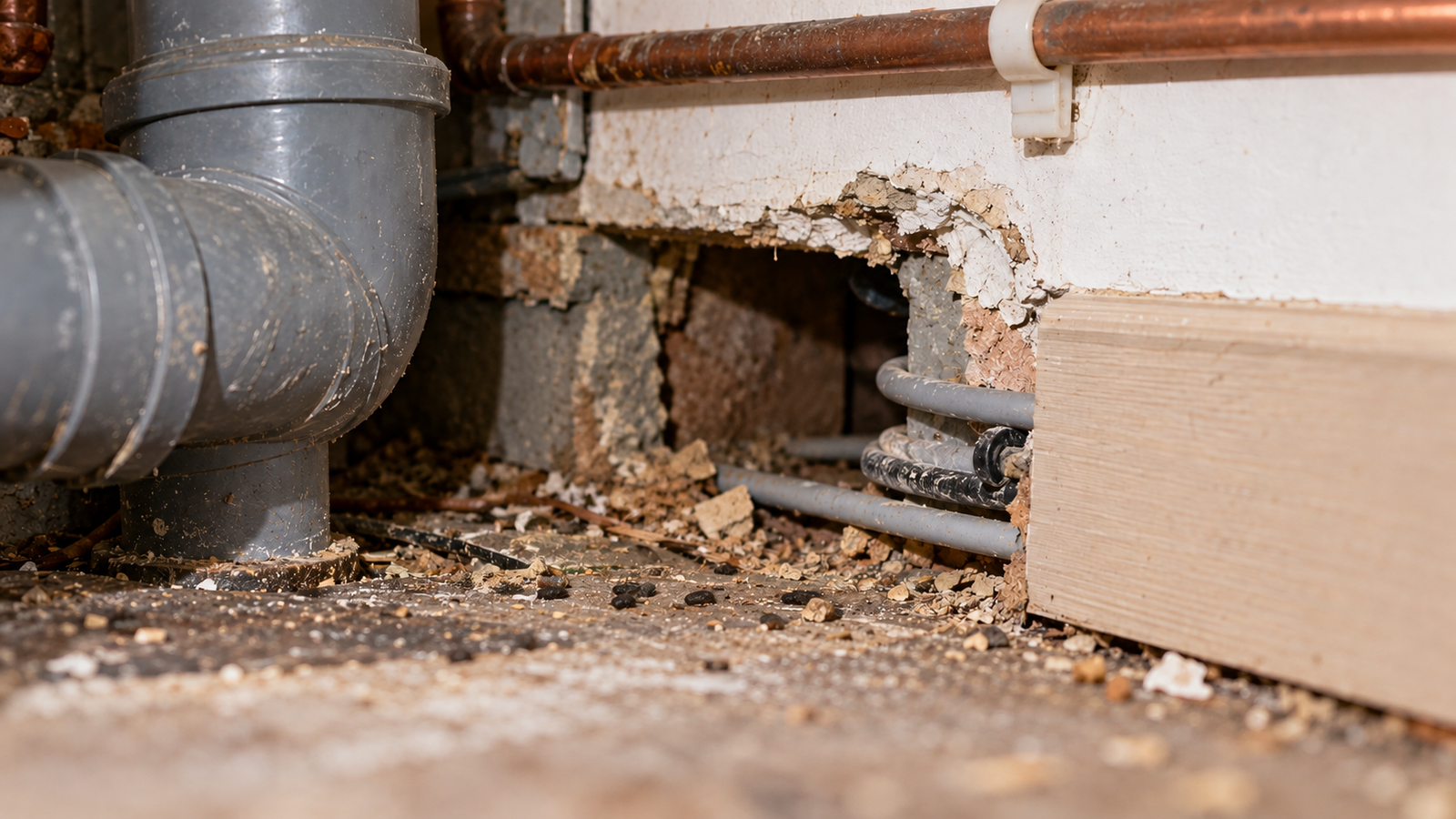
- It gives “gaps or holes in walls, vents, skirting boards, that lead to pest infestations” as an example of a maintenance problem that can fall within scope.
- It says landlords must not assume a hazard such as damp and mould or pest hazards is caused by the tenant’s lifestyle.
The British Pest Control Association (BPCA) campaigned for this. Its chief executive has said pest management will likely form part of a landlord’s legally enforceable duties from 2026.
Which Pest Problems Could Count as a Hazard?
Whether a problem is a significant hazard depends on the risk of harm in that particular home. These are the pest problems most likely to be raised by tenants.
Rats and Mice
Rodents contaminate food and surfaces with droppings and urine. The BPCA notes mice can spread diseases such as Salmonella and Listeria, and that many electrical fires have been attributed to mice gnawing cables. In flats, they often travel between homes through service ducts and gaps around pipes.
Cockroaches and Bed Bugs
Cockroaches spread bacteria in kitchens and are hard to clear without a full treatment. Bed bugs cause bites, sleepless nights and real distress, and they move easily between flats in the same block.
Refuse and Bin Areas
Overflowing communal bins attract rats and flies. Bin stores with damaged doors or gaps in the walls give pests easy shelter close to the homes.
Awaab’s Law Timescales
Emergency Hazards
The investigation and the safety work must both be completed within 24 hours of the landlord becoming aware of the hazard.
Significant Hazards
- Investigate within 10 working days of becoming aware of the hazard.
- Written summary to the tenant within 3 working days of the investigation ending.
- Relevant safety work undertaken within 5 working days of the investigation ending.
For a pest problem, that is a tight window. A landlord needs to know who to call before the report comes in, not after.
Awaab’s Law Social Housing: What Landlords Should Do About Pests
Do Not Blame the Tenant by Default
The guidance is clear that landlords must not assume a pest problem is down to how the tenant lives. Mice and rats usually get in because of the building, not because of the household.
Fix the Way In, Not Just the Infestation
The guidance points to gaps and holes in walls, vents and skirting boards. That is a proofing problem. Clearing the pests without sealing the entry points means the same report will come back.
That is why rodent proofing matters as much as treatment under Awaab’s Law.
Keep Records
The BPCA advises pest professionals to document any other issues they spot in homes. For landlords, a clear record of what was found, when, and what was done is the evidence that the deadlines were met.
Have a Contractor Ready
With 10 working days to investigate and 5 more for safety work, there is no time to shop around. Agree in advance who will respond, how quickly, and what they will record.
Does Awaab’s Law Apply to Private Landlords?
Not Yet
Awaab’s Law currently applies only to social landlords: councils and housing associations. The Renters’ Rights Act 2025 gives the government power to extend it to private rented homes, but no start date has been confirmed and the government has said it will consult first.
What Private Landlords Should Do Now
Private landlords already have legal duties on housing standards. Treating pest reports quickly, fixing the entry points and keeping records now means you are ready if and when the rules change.
How We Help Landlords and Housing Providers
Inspection and Treatment
We inspect the property, identify the pest and find how it is getting in. Then we treat it, whether it is rats, mice, cockroaches or bed bugs.
Proofing
Once the activity is dealt with, we seal the gaps around pipes, vents, skirting boards and air bricks so pests cannot get back in. That is the part that stops the same hazard being reported again.
Explaining What We Found
We always explain what we find and why, so you have a clear picture of the problem and what was done about it.
From 30 November 2026, pest problems in social housing come with fixed deadlines. Pests are not a separate hazard in the guidance, but they fall within domestic hygiene, and the guidance names gaps that let pests in as a maintenance problem landlords are responsible for.
The landlords who will find this easiest are the ones who treat the cause, not just the pests, and keep a record of every step.
If you manage homes in Bexley, Bexleyheath, Sidcup, Welling or anywhere in South London, call us on 07888 225775. You can see the full list of areas we cover on our service areas page.
Awaab’s Law Phase 2 FAQs
When does Awaab’s Law Phase 2 start?
30 November 2026.
Are pests covered by Awaab’s Law?
Pests are not listed as a separate hazard in the Phase 2 guidance, but they fall within the domestic hygiene hazard. The guidance also names gaps and holes that lead to pest infestations as a maintenance problem within scope.
What are the Awaab’s Law timescales?
Emergency hazards: investigate and make safe within 24 hours. Significant hazards: investigate within 10 working days, send a written summary within 3 working days of the investigation, and undertake relevant safety work within 5 working days of the investigation.
Does Awaab’s Law apply to private landlords?
Not yet. It applies to social landlords only. The government has the power to extend it to private rented homes, but no date has been set.
Can a landlord say a pest problem is the tenant’s fault?
The guidance says landlords must not assume a pest hazard is caused by the tenant’s lifestyle. The cause has to be investigated properly.