

How to Stop Rats in the Garden Before They Move Indoors
A rat in the garden is rarely a one-off, and in autumn it is often the first step towards a rat in the house. The good news is that most of what draws rats in is within your control.
Rats breed fast: the British Pest Control Association says a pair of brown rats can potentially produce 200 babies and 2,000 descendants in one year. They also carry disease, and the UK Health Security Agency recorded 154 cases of leptospirosis in England in 2024, an infection spread through the urine of animals such as rats. If you have spotted activity outside, our rat control service deals with the rats themselves, while the steps below help you keep them from moving closer.
Why Do You Get Rats in Your Garden?
You get rats in your garden because it offers them food, shelter and a safe route to move around. A garden does not need to be messy to attract them; one reliable food source and somewhere quiet to burrow is often enough.
Food Sources
Bird seed is one of the most common draws, as rats feed on what falls below feeders and come back night after night. Compost heaps with cooked food, pet food left outside and overflowing bins all add to the supply.
Shelter and Cover
Rats like loose soil, dense shrubs and dark spaces. Sheds, decking, log piles and stacked garden rubbish give them protection from predators and the weather, which is why activity often centres on one corner of the garden.
Water and Easy Routes
Ponds, water butts and leaking taps give rats something to drink. Fences, hedges and walls act as runways, so a garden that backs onto other gardens or open ground will see more passing traffic.
What Are the Signs of Rats in the Garden?
The main signs of rats in the garden are burrow holes, droppings, worn runs and gnawing damage. Rats are mostly active at night, so you will usually find what they leave behind before you see one.
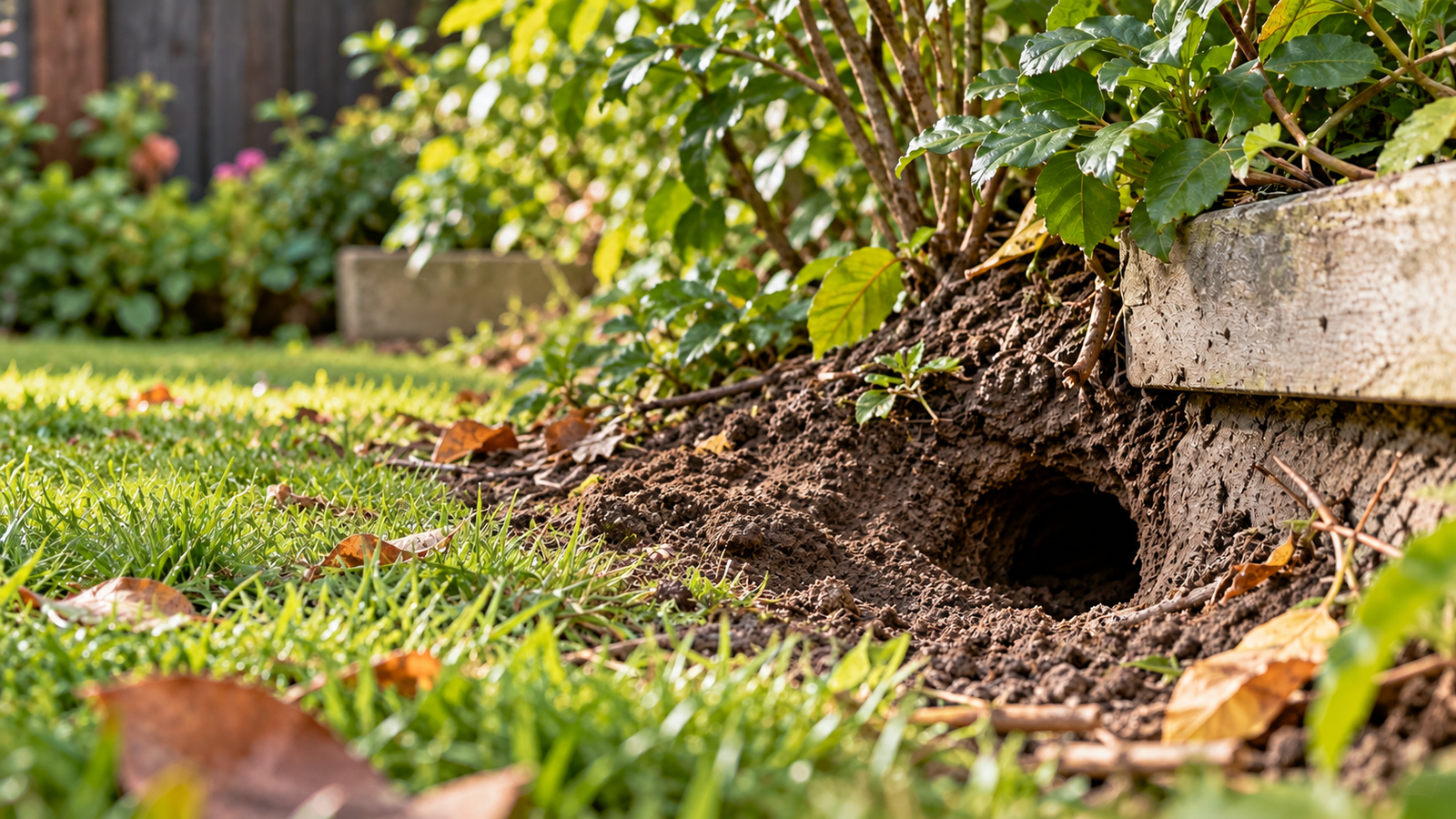
Rats in Garden Holes and Burrows
Rat burrow entrances are smooth, rounded holes around 5 to 7cm wide, often at the base of walls, under sheds or beneath decking. A burrow in use tends to have loose, fresh soil spread outside it and no cobwebs or leaves across the entrance.
Droppings and Runs
Rat droppings are dark, around 1 to 2cm long and shaped like a grain of rice with blunt ends. Rats also follow the same paths each night, which leaves flattened trails through grass and greasy marks along fences and walls.
Gnawing and Damage
Look for chewed holes in compost bins, shed doors and plastic storage boxes. Gnawed vegetables, fruit with tooth marks and a pile of empty snail shells can also point to rats.
Will Rats in the Garden Come Into the House?
Rats in the garden will come into the house if they find a way in and a reason to do so. As the weather turns colder in autumn and winter, they look for warmth and steady food, and a home next to an established garden burrow is the obvious next step.
How Rats Get From the Garden Into the Home
Rats can squeeze through gaps of around 2.5cm, so small openings matter more than most people expect. The routes we check most often are:
- Damaged air bricks and vents: broken grilles at the base of walls lead straight into the space under the floor.
- Gaps around pipes and cables: holes where services enter the building are often left unsealed.
- Drains: broken or disused drain pipes give rats a hidden route from outside to inside.
- Doors and garages: worn seals and gaps under garage and back doors are easy to push through.
- Extensions and decking: the join between an extension and the original house is a common weak point.
Why Autumn Is the Time to Act
Dealing with garden rats now is far simpler than dealing with them once they are nesting in a loft, wall cavity or under the floor. Sealing the routes above before the cold sets in is what rodent proofing is designed to do.
How Do You Prevent Rats in the Garden?
You prevent rats in the garden by taking away their food and shelter. None of the steps below are complicated, but they work best when done together and kept up over time.
Change How You Feed the Birds
Use feeders with trays, put out only what birds will finish in a day and clear up spilt seed. If rats are already visiting, stop feeding for a few weeks so the food source disappears.
Manage Compost and Bins
Keep cooked food, meat and dairy out of the compost, and turn the heap often so rats are disturbed. Bins should have tight lids, sit on hard standing and be kept clear of holes.
Clear Clutter and Cut Back Cover
Move log piles, old pots and garden rubbish away from fences and the house. Trim back dense shrubs and long grass along boundaries so rats have less cover as they travel.
Protect Sheds and Decking
Spaces under sheds and decking are favourite nesting spots. Fitting fine galvanised mesh around the base, set into the ground, stops rats burrowing underneath.
How Do You Get Rid of Rats in the Garden?
You get rid of rats in the garden by removing what attracts them and then treating the rats that are already there. Prevention alone will not clear an active burrow, and treatment alone will not stop new rats moving in.
Do Natural Deterrents Work?
Scents such as peppermint oil and vinegar are popular searches, but they tend to have a short and limited effect. They will not move rats on from a garden that still offers food and shelter.
The Risks of DIY Poison
Poison placed carelessly can be eaten by pets, birds and other wildlife, and rats that die underground or under floors can cause smell problems. Rats are also wary of new objects, so badly placed bait is often ignored while the colony keeps growing.
When to Call a Professional
If you see rats during the day, find several burrows or notice signs close to the house, it is time to bring someone in. I spent 9 years at Rentokil before setting up on my own, and the pattern is always the same: the sooner a garden colony is treated, the less chance it has of reaching the home.
Our technicians are Level 2 certified, and we work through a 3-visit treatment programme that starts with an on-site inspection. We give an estimate over the phone and can work evenings and weekends, which helps if you are out during the day.
Are Rats in the Garden Dangerous?
Rats in the garden can be dangerous because they carry diseases such as leptospirosis, which spreads through their urine. The risk is highest where rats contaminate soil, water, vegetables or surfaces that people and pets touch.
Simple Ways to Reduce the Risk
- Wear gloves: use them when gardening, turning compost or clearing areas where rats have been.
- Wash produce: clean home-grown fruit and vegetables well before eating them.
- Cover cuts: keep any cuts or grazes covered while working outside.
- Keep children and pets away: keep them clear of burrows and droppings until the area is treated.
Rats in the garden are a warning sign, especially in autumn, when they start looking for a warmer place to spend the winter. Taking away food and shelter, protecting sheds and decking and sealing gaps around the house will stop most problems before they start.
If rats are already settled outside, we cover homes across Bexley and South London, including pest control in Eltham and pest control in Bromley. We are fully licensed and insured, members of the BPCA, and every job comes with our satisfaction guarantee.
FAQ
Is it normal to see rats in the garden during the day?
Rats are mostly active at night, so seeing one in daylight usually means there is competition for food or the population is growing. It is a good reason to check for burrows and call in a professional.
If I see one rat in the garden, will there be more?
Rats live in groups, so one rat often means others nearby. Because they breed quickly, a small group can grow fast if food and shelter are available.
Do rats live in compost bins?
Rats often nest in compost heaps because the material is warm, loose and easy to burrow into. Keeping food waste out and turning the heap regularly makes it far less attractive.
What do rat holes in the garden look like?
Rat holes are smooth, rounded entrances around 5 to 7cm across, usually with loose soil outside. You will often find them under sheds, beneath decking or along the base of walls and fences.
Can rats get from the garden into the house through the drains?
Yes, broken or disused drain pipes can give rats a hidden route into a property. Damaged air bricks and gaps around pipes are other common entry points worth checking.