
Weevils in Flour: Where They Come From and What to Do Before Christmas Baking
Finding small brown beetles in the flour just before your Christmas baking is frustrating, but it is a common problem with a clear fix. Here is how to work out what you have, where it came from and how to stop it spreading through your cupboards.
Flour is a staple in most British kitchens, and UK Flour Millers figures put flour consumption at around 54kg per person per year. The British Pest Control Association notes that the stored product weevils found in the UK are only 2 to 3mm long, which is why most people only spot them once a packet is open on the worktop. If they keep coming back, our stored product insect control service deals with the whole cupboard, not just the bag you found them in.
What Are Weevils in Flour?
Weevils in flour are usually one of a small group of pests known as stored product insects, which live and breed in dry foods such as flour, cereals, rice and pasta. Most of them are tiny beetles. The word "weevil" is used for all of them in everyday speech, even though only some are true weevils.
Are They Really Weevils?
Often they are not. The BPCA points out that some stored product beetles are regularly mistaken for weevils. True weevils, such as the grain weevil and the rice weevil, bore into whole grains to lay their eggs, so they are more often found in rice, wheat or dried pasta than in finely milled flour.
The insects people find crawling through a bag of plain or self raising flour are frequently flour beetles instead. The confused flour beetle and the red rust flour beetle are two of the most common stored product insects in the UK. For you, the difference matters less than the response, because the clean up is much the same.
What Do Flour Weevils Look Like?
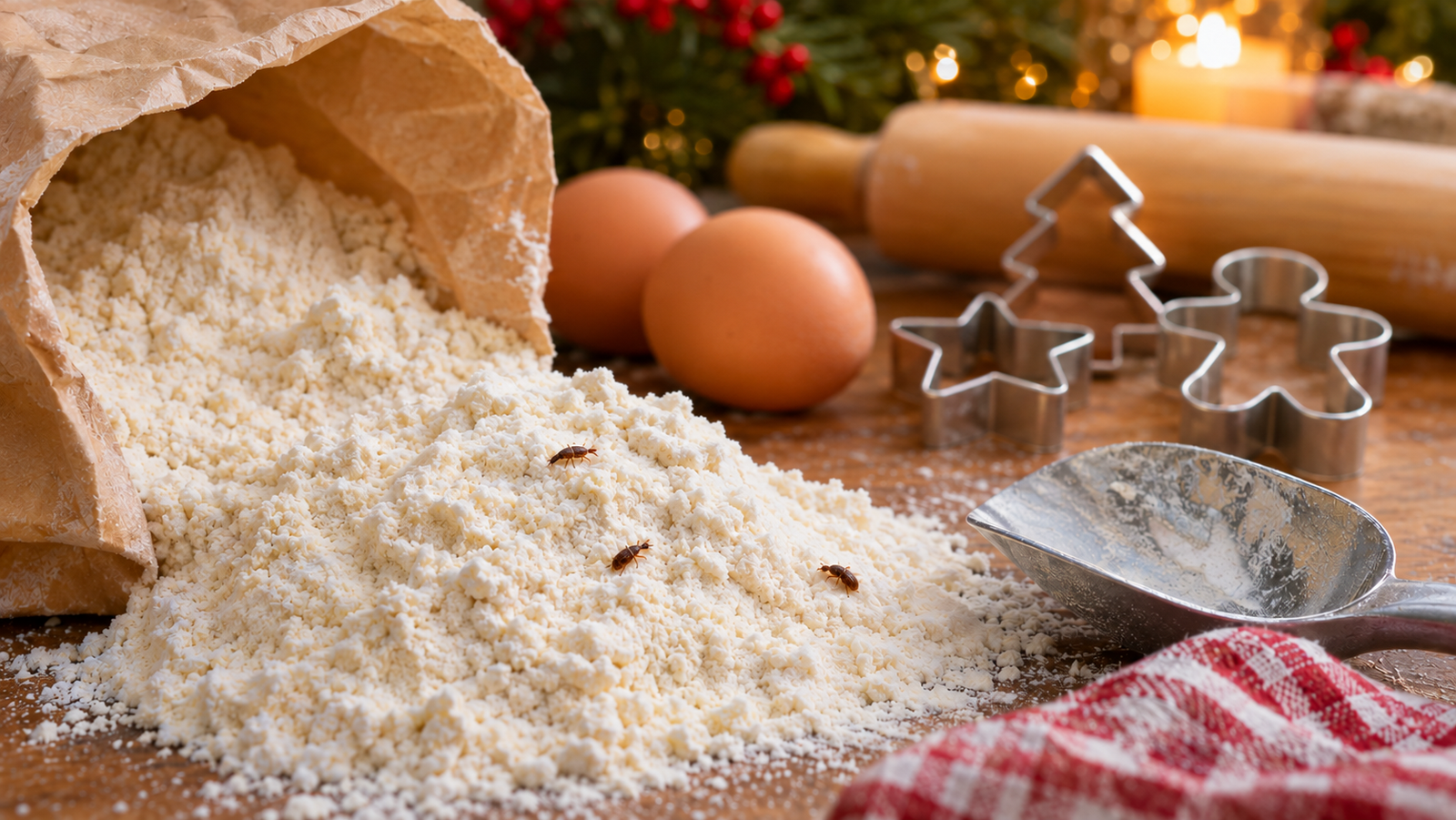
Flour weevils are small, slim, reddish brown to dark brown insects, roughly the length of a grain of rice cut in half. True weevils have a long snout and a pitted, dotted look on the section behind the head. Flour beetles are flatter, with no obvious snout, and move quickly across the surface when the bag is disturbed.
- Grain and rice weevils: dark, snouted, around 2 to 3mm, usually in whole grains, rice or pasta.
- Flour beetles: reddish brown, flat, around 3mm, common in flour, cake mixes and cereals.
- Larvae: tiny pale grubs that are hard to see against white flour.
Where Do Weevils in Flour Come From?
Weevils in flour usually come into the house in a food product, rather than walking in from outside. Eggs and larvae are hard to see, so a packet can look perfectly clean in the shop and only show adult insects weeks later in your cupboard.
How Do You Get Weevils in Flour?
Most infestations start in one of three ways. Knowing which one applies helps you avoid a repeat.
- Already in the packet: eggs or larvae were present when the product was bought.
- Spread from another product: insects move from one infested packet to others nearby, including flour in paper bags.
- Forgotten food: the BPCA highlights partly used packets left at the back of shelves as a common source in homes.
Why Do They Show Up Before Christmas?
Many of us bake far more in November and December than in the rest of the year. Bags of flour, dried fruit, nuts and spices that have sat in the cupboard since last Christmas get pulled out all at once. That is often the moment a slow, hidden infestation is finally noticed.
What Are the Signs of Weevils in Flour?
The first sign is usually adult insects moving in the flour or on the shelf. The BPCA notes that the egg, larva and pupa stages are much harder to spot, so by the time you see adults the problem may have been building for a while.
Signs to Check For
- Live or dead insects in the flour, on the shelf or in the folds of packaging.
- Clumps or webbing in the flour, which can also point to pantry moth larvae.
- Discoloured or tainted food, which the BPCA lists as a sign of stored product insect activity.
- Small holes in grains of rice or wheat, left when adult weevils emerge.
- Insects in other products such as cereals, cake mixes, pasta or pet food.
If you also see small moths flying around the kitchen in the evening, you may have pantry moths alongside the beetles. Our moth control service covers those as well.
Are Weevils in Flour Dangerous?
Weevils in flour do not bite or sting, and they will not harm you or your family directly. The problem is the food itself. Infested flour is tainted by the insects, their larvae and their waste, and it should be thrown away rather than sifted and used.
The bigger risk is spread. The BPCA warns that stored product insects move quickly from one product to the next once they are in a cupboard. A single bag left in place can reinfest everything you have just cleaned.
What to Do If You Find Weevils in Flour: Step by Step
The quickest fix is to remove the source, clean the cupboard thoroughly and change how you store dry food. Follow these steps the same day you find them.
- Empty the cupboard: take out every packet of dry food, not just the flour.
- Check each product: look in flour, rice, pasta, cereals, dried fruit, nuts, spices and pet food.
- Bin anything infested: seal it in a bag and put it in an outside bin, as the BPCA advises.
- Vacuum the shelves: pay attention to corners, shelf supports and the gaps where shelves meet the walls, then empty the vacuum outside.
- Wipe everything down: clean the shelves and cupboard walls and let them dry fully.
- Restock in sealed containers: move dry food into tight lidded containers before it goes back in.
- Watch for two to three weeks: if insects keep appearing, the source has not been found yet.
If you find insects in a product you have only just bought, the BPCA suggests taking it back to the shop so they can look into it. Keep the packaging and receipt if you can.
How to Stop Weevils in Flour Coming Back
The best way to stop weevils in flour is to store dry food in sealed containers and use it up in rotation. Paper bags and thin plastic give stored product insects an easy way in and out.
Store Flour the Right Way
- Use airtight containers made of glass, metal or hard plastic with a tight lid.
- Buy what you need for the next few weeks rather than stocking up months ahead.
- Keep it cool and dry: the BPCA notes that temperatures of 10°C or below slow down breeding.
- Label opened packets with the date so older food is used first.
Keep Cupboards Clean
Crumbs and spilled flour in cupboard corners are enough to feed a small population. A quick vacuum of the food cupboard every few weeks removes that food source. It also means you see any insects early, while they are still in one place.
Do a Pre-Christmas Cupboard Check
Before the Christmas baking starts, take ten minutes to go through the baking shelf. Throw out half used packets from last year and wipe the shelf down before the new shopping goes in. That one check stops old stock from passing insects on to fresh flour.
When Should You Call a Pest Controller About Weevils in Flour?
Call a professional when insects keep coming back after a full clean, when they are spreading to several cupboards or rooms, or when you cannot find the source. At that point the infestation is usually in a hidden spot such as behind kitchen units, in a forgotten box or inside pet food.
What We Do
Our Level 2 certified technicians start with an on-site inspection to identify the insect and trace where it is breeding. We then work through a 3-visit treatment programme, so we can check the problem has gone rather than treating once and leaving. You get an estimate over the phone before we visit.
I have worked in pest control for over 12 years, 9 of them at Rentokil, and every job we take on starts with finding the source. We work with residential and commercial customers across Bexley and South London, including homes in Eltham and households across Bromley. Shops, cafes and other food premises can find out more on our commercial pest control page.
Most kitchen infestations can be cleared at home by following the steps above. If the beetles keep returning in the run up to Christmas, we are fully licensed and insured, cover evenings and weekends, and back our work with a satisfaction guarantee.
FAQs
Can you still use flour with weevils in it?
We would not recommend it. Infested flour is tainted by the insects, their larvae and their waste, so the safest option is to seal it in a bag and put it in an outside bin.
How do weevils get into unopened flour?
In most cases the eggs or larvae were already in the product when it was bought. They are too small to see, so the packet looks clean until adult insects appear weeks later.
Do weevils in flour spread to other food?
Yes. Stored product insects move from one product to the next, so check rice, pasta, cereals, dried fruit, nuts, spices and pet food in the same cupboard. Anything showing signs of insects should go.
Are weevils in flour a sign of a dirty kitchen?
Not necessarily. Many infestations arrive in shop bought food, even in very clean kitchens. Spilled flour and forgotten packets can help them build up, though, so regular cupboard cleaning makes a difference.
How long does it take to get rid of weevils in flour?
If you remove every infested product and clean the cupboard well, most home infestations clear within a few weeks. If insects are still appearing after that, there is likely a hidden source that needs a professional inspection.